The newly released COMESA Investment Report 2025 attributed the sharp rise to Egypt’s Ras El Hekma megaproject, which played a pivotal role in reshaping investment trends across the region.
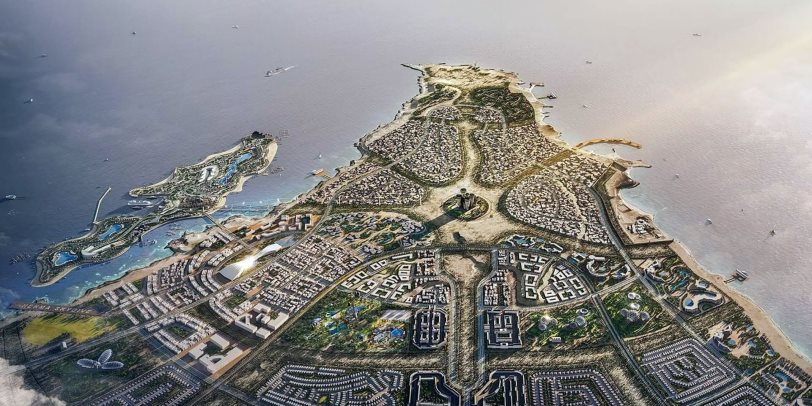
Foreign direct investment (FDI) inflows into the Common Market for Eastern and Southern Africa member states surged by 154% in 2024, reaching $65 billion, according to the newly released COMESA Investment Report 2025.
The report attributed the sharp rise to Egypt’s Ras El Hekma megaproject, which played a pivotal role in reshaping investment trends across the region.
The report, launched during the COMESA Ministerial Council meeting in Zambia and prepared in cooperation with UN Trade and Development (UNCTAD) and the COMESA Regional Investment Agency (RIA), noted that even excluding Ras El Hekma, FDI inflows still grew by 16%, signaling stronger investor confidence in the region’s economic outlook.
COMESA’s share of global FDI doubled from 2% to 4%, while its share of investment flows to developing countries increased from 3% to 7%, accounting for 67% of total African FDI. European and U.S. investors remained the leading contributors, with the Netherlands and the United States at the forefront.
The report also revealed a near-doubling of international project finance (IPF) to $79 billion, driven by major expansions in renewable energy, electricity networks, and large-scale infrastructure in Egypt, Tunisia, Rwanda, and Malawi. Meanwhile, announced Greenfield investments reached $77 billion, the second-highest level in COMESA’s history, representing two-thirds of all Greenfield project value across Africa.
Despite the strong growth momentum, FDI remained highly concentrated, with Egypt, Ethiopia, Uganda, the Democratic Republic of Congo, and Kenya absorbing 90% of all inflows. Intra-COMESA investment also stayed limited, representing only 3% of Greenfield project numbers and 6% of their value.
According to the report, sectoral performance varied widely: construction investment grew fivefold, supported by major expansions in Egypt, while basic metals rose 71%. Energy and gas maintained their position as the largest investment sectors. In contrast, extractive industries fell 61%, and ICT investment declined 55% following a record year in 2023.
Investment trends related to the SDGs showed mixed results. Renewable energy rose 67%, and health and education investments grew 130%, while food systems, water and sanitation, and transport infrastructure saw notable declines.
The report outlined five priority areas to ensure sustainable investment growth in COMESA: broadening the base of beneficiary countries, strengthening manufacturing and value addition, accelerating digital infrastructure development to close the ICT investment gap, enhancing human capital through innovative financing, and improving data quality to support evidence-based decision-making.
Ambassador Mohamed Kadah, Assistant Secretary General for Programmes, welcomed the findings, noting that they reflect growing global confidence in COMESA economies and reinforce the bloc’s position as a leading investment destination in Africa.
Richard Bolwijn, Director of Investment Research at UNCTAD, emphasized that the region experienced an exceptional year of record growth despite global slowdown, pointing to a strategic opportunity to enhance resilience by diversifying investors, boosting digital infrastructure, supporting SMEs, and deepening regional integration.
Heba Salama, CEO of COMESA RIA, stated that the report serves as a strategic tool to strengthen the region’s competitiveness, providing actionable insights to help member states attract higher-quality, sustainable investment. She affirmed the agency’s commitment to translating recommendations into concrete reforms.