
The observatory will serve as a national mechanism for integrating scientific evidence into policy design and program implementation, according to an official statement by the ministry.
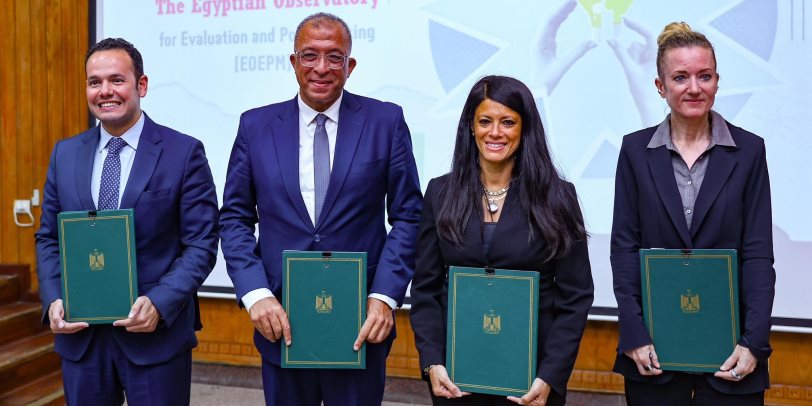
The Egyptian government has launched a new national platform to institutionalize evidence-based policymaking, with the signing of a cooperation protocol to establish the Egyptian Observatory for Evaluation and Policy-Making.
The observatory will serve as a national mechanism for integrating scientific evidence into policy design and program implementation, according to an official statement by the ministry.
Its main aim is to enhance government performance by embedding robust systems for monitoring, evaluation, and impact assessment across public institutions and think tanks.
The agreement was signed by Minister of Planning, Economic Development, and International Cooperation Rania Al-Mashat; Head of the Information and Decision Support Center (IDSC) Osama El-Gohary; President of the National Planning Institute Ashraf El-Araby; and Executive Director of the International Initiative for Impact Evaluation (3ie) Marie Gaarder.
By strengthening institutional capacity in monitoring and evaluation, the initiative seeks to improve the efficiency and effectiveness of government programs, ensure measurable developmental outcomes, and promote long-term economic and social welfare.
According to Al-Mashat, the protocol reinforces the Ministry’s mandate under Egypt’s Planning Law (Law No. 18 of 2022) to lead national sustainable development strategies, track their implementation, and ensure alignment with Egypt Vision 2030. She noted that the ministry also supports integrated planning efforts and works with development partners to promote inclusive, sustainable economic growth.
The Ministry of Planning will provide strategic guidance for the observatory, ensuring its monitoring and impact evaluation activities align with national development priorities.
It will also partner with the National Planning Institute to deliver specialized training programs and work closely with affiliated bodies, including the Egyptian Impact Lab and the Central Agency for Public Mobilization and Statistics (CAPMAS), to promote the integration of evaluation methods into Egypt’s broader policy framework.
Al-Mashat emphasized that the observatory comes at a critical time, as Egypt moves forward with key legislative and economic reforms, including the new Planning Law, Unified Public Finance Law, and the ongoing structural reform program. She noted the growing need to assess the impact of these reforms — particularly those related to macroeconomic stability, green transformation, and legal and regulatory changes under initiatives like “IRADA.”
Osama El-Gohary welcomed the establishment of what he called a “Collaborative Impact Evaluation Lab,” describing it as a cornerstone of Egypt’s move toward a more agile, data-driven government.
He praised the Ministry’s role in building international partnerships to support the observatory and emphasized the importance of using scientific evidence to improve decision-making.
Ashraf El-Araby, representing the National Planning Institute, highlighted the importance of the partnership with 3ie as a foundation for building research capacity within Egypt’s public sector. He confirmed that all stakeholders are aligned in their commitment to mobilizing resources and expertise to ensure the success of the initiative.
From the international side, Marie Gaarder expressed enthusiasm for the collaboration, noting 3ie’s extensive experience in helping governments around the world — particularly in Africa — design more effective policies through rigorous impact evaluation. She stressed that access to high-quality evidence allows policymakers to make better-informed decisions.
Under the terms of the agreement, the IDSC will host the observatory and play a central role in translating research findings into actionable policy recommendations. It will also help identify priority research areas, organize workshops and training programs, and contribute to research efforts in coordination with academic and policy experts.
The National Planning Institute will lead on research activities in priority policy areas, drawing on international best practices and forecasting tools. It will also develop professional diploma programs in monitoring, evaluation, and learning (MEL), aimed at training government staff and enhancing public sector capacity both centrally and locally.
As the technical partner, 3ie will support the observatory with globally recognized methodologies in impact assessment, assist in capacity-building through training in collaboration with leading academic institutions, and facilitate access to international expertise and data systems. The organization will also help strengthen Egypt’s use of administrative data and foster a culture of evidence-informed policymaking.