Planning Minister Rania Al-Mashat presented the plan amid ongoing regional uncertainties, noting that preliminary indicators from the first nine months of the current fiscal year signal improving economic performance
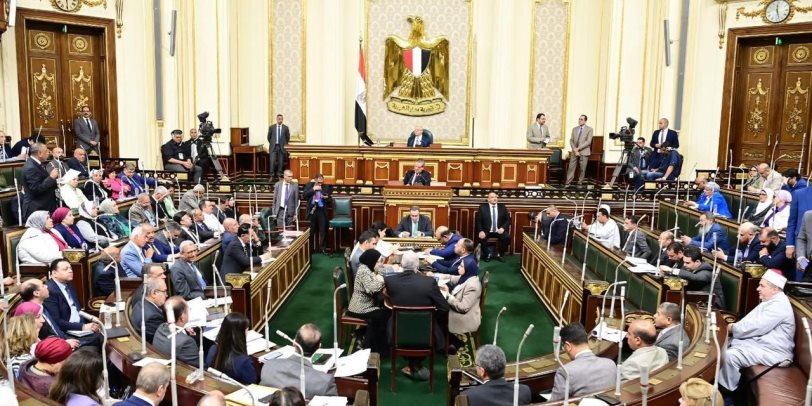
Egypt’s House of Representatives has endorsed the national budget and economic development framework for FY2025/2026, setting a target for real GDP growth of 4.5%. This represents a significant increase from the 2.4% growth recorded in FY2023/2024.
Planning Minister Rania Al-Mashat presented the plan amid ongoing regional uncertainties, noting that preliminary indicators from the first nine months of the current fiscal year signal improving economic performance. She highlighted that the plan focuses on structural reforms and concentrated investment to navigate these complex conditions.
Public investment in the upcoming fiscal year is projected at approximately EGP 1.158 trillion, up from about EGP 1 trillion allocated in FY2024/2025. Nearly 28% of this amount—EGP 327 billion—is dedicated to human development sectors, including health, education, and social services. The state budget will contribute EGP 219 billion toward these areas.
The government reiterated its commitment to the Haya Karima (Decent Life) initiative aimed at rural development, with phase one receiving EGP 350 billion to improve living conditions for 18 million residents in over 1,400 villages across 20 governorates. The second phase allocates funds for essential infrastructure and expanding universal health insurance.
In line with its reform agenda, the government plans to reduce direct state involvement in the economy. A new State Ownership Policy Law, recently passed by parliament, encourages greater private sector participation. Meanwhile, a review is underway to restructure 59 economic authorities, determining their future status through a committee supported by technical expertise.
To enhance governance and investment management, the Adaa system—tracking 4,000 performance metrics across 36 ministries and agencies—will be further expanded. Training is ongoing to help public entities utilize a centralized digital platform covering 270 state-owned companies, aiming to improve transparency and efficiency.
Funding for land compensation related to national projects has increased to EGP 16 billion for the combined fiscal years FY2024/2025 and FY2025/2026, with more than EGP 3.4 billion allocated to projects in Giza.
Additionally, the government plans to conduct a new economic census via the Central Agency for Public Mobilization and Statistics (CAPMAS) to better capture informal economic activity and inform policy decisions.
Minister Al-Mashat stressed that the plan’s formulation took place amid “delicate circumstances” worsened by rapid regional developments. She called for flexible planning and continuous monitoring to adapt to evolving conditions, while expressing gratitude for parliament’s thorough review and constructive input.